BACKGROUND
This repair came to us through one of our Fleet Management company customers, who contacted us on behalf of an ambulance operator following a significant incident. The vehicle had been driven under a bridge that was fractionally too low with consequences that extended across almost every aspect of the upper body and rear of the vehicle.
THE DAMAGE
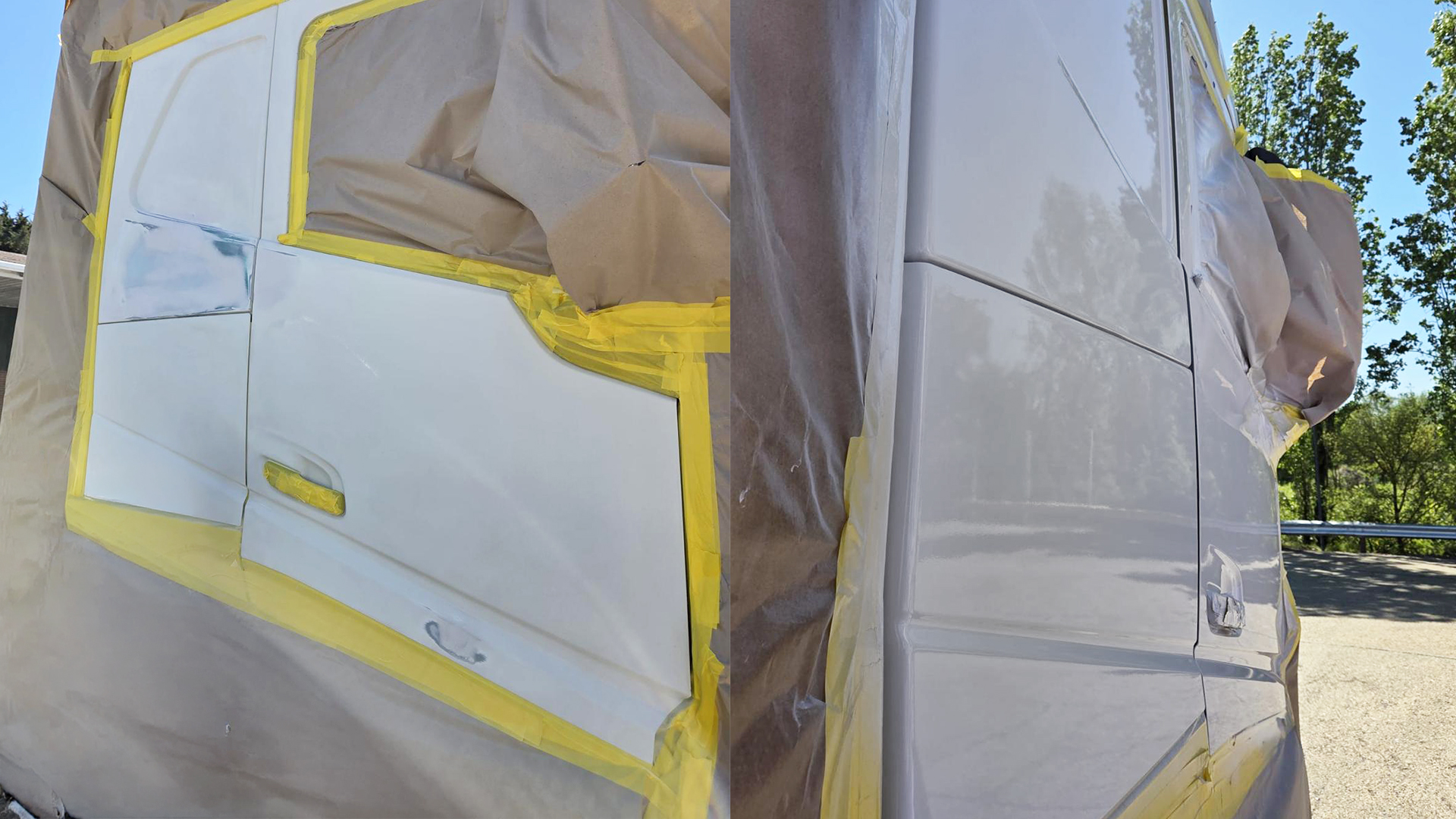
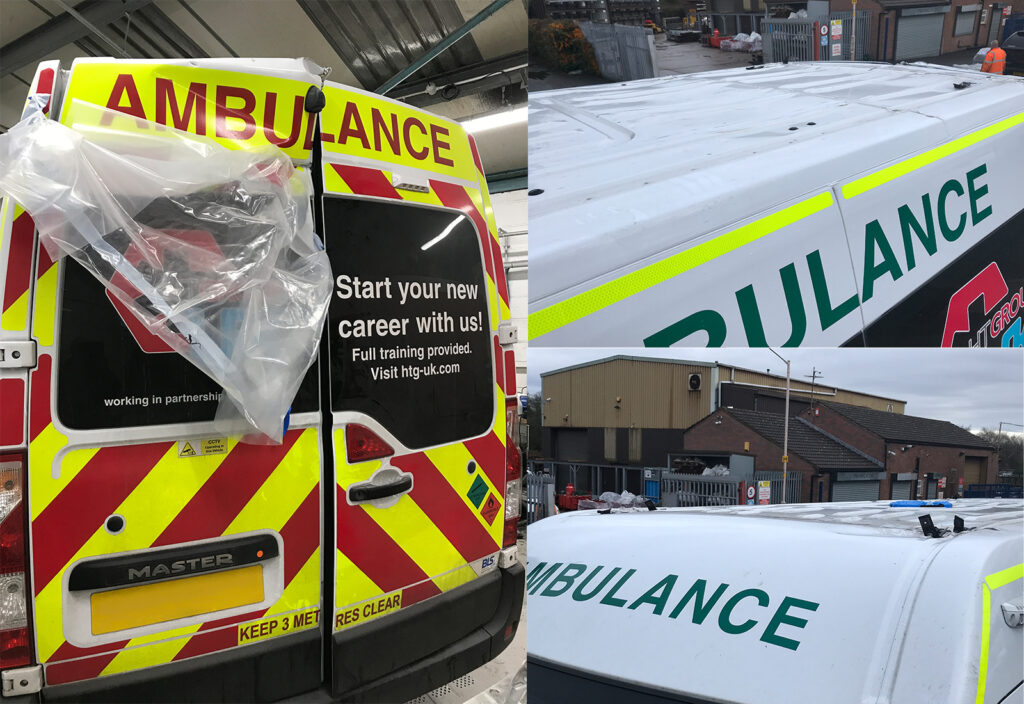
The impact stripped both blue light units and a number of other roof-mounted items clean from the vehicle. Damage ran the entire length of the roof, affecting both panels in full. The force of the collision had also caused both rear doors to pull away from the body of the van, and the cab cone had sustained damage as part of the same incident.
This was not a straightforward repair. It involved multiple interconnected elements across the bodywork, electrical systems, glazing, and livery – all of which needed to be resolved to return the vehicle to full operational specification.
OUR APPROACH
Before any work began, our technical team carried out a detailed assessment to map the full extent of the damage and plan the repair sequence carefully. Given the specialist nature of the vehicle and the bespoke internal passenger area, every stage required a methodical approach to avoid creating secondary issues while resolving the primary damage.
THE REPAIR PROCESS
1. Roof Panel Replacement Both – We fully replaced the roof panels across the entire length of the vehicle. Throughout this process, close attention was paid to maintaining the integrity and quality of the bespoke internal passenger area – a significant consideration on an ambulance, where the interior specification is purpose-built and cannot simply be stripped back without care.
2. Blue Light System and Roof-Mounted Equipment – The damaged blue light units and associated roof-mounted equipment were removed, assessed, and replaced. This element of the repair went beyond a straightforward refit: the wiring system required full rewiring to restore correct functionality. All connections were documented and tested thoroughly before the vehicle was signed off.
3. Rear Door Reinstatement Both – The rear doors, which had pulled away from the body of the van during the incident, were reinstated and realigned. Rear door windows were fitted as part of this element of the repair, restoring the vehicle to its original specification.
4. Cab Cone Repair – The damaged cab cone was repaired and returned to the correct condition and appearance.
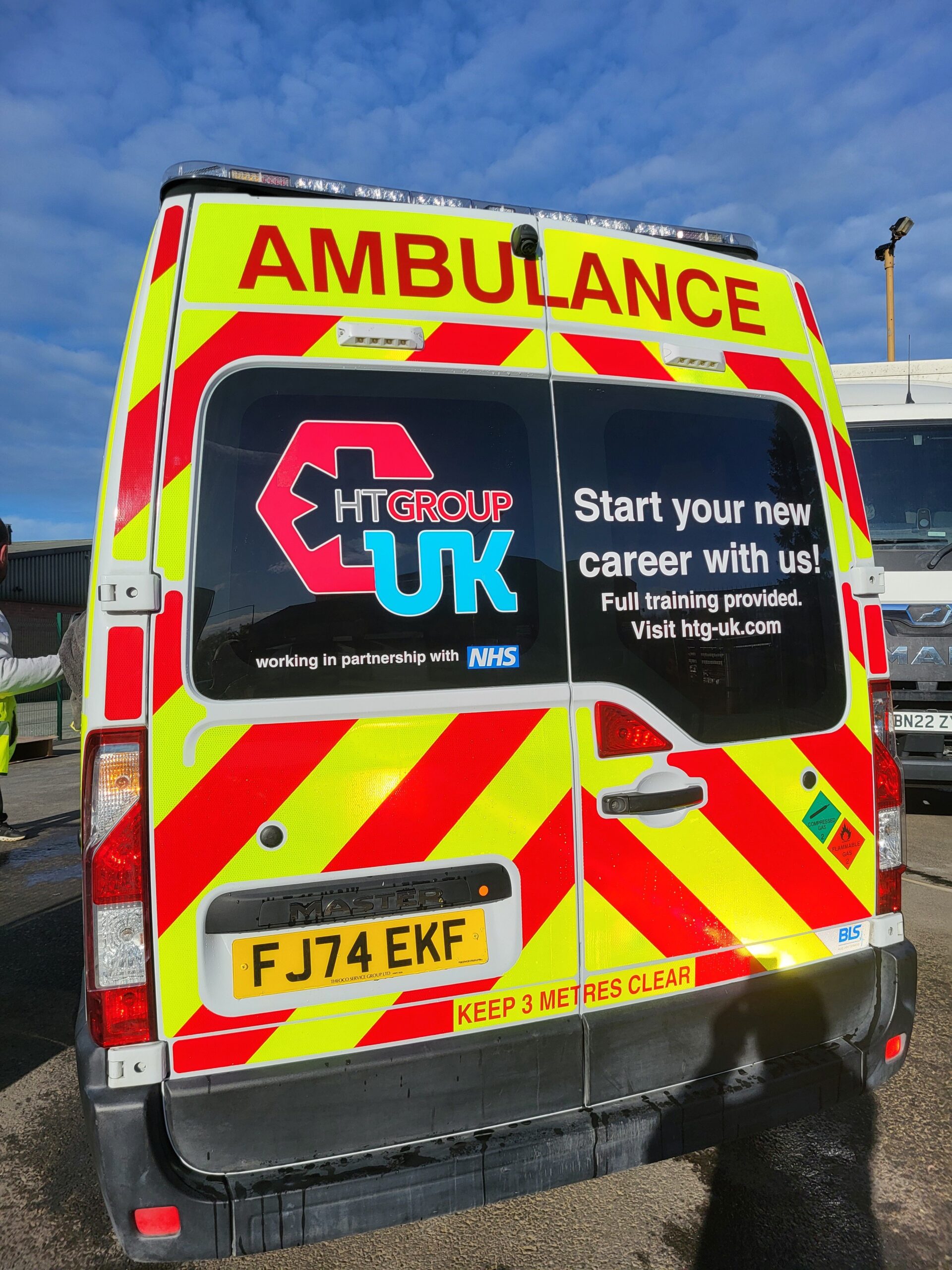
5. Livery Restoration – With structural and mechanical work complete, the livery was reinstated across all affected areas. Careful colour matching ensured a consistent finish in line with the operator’s fleet presentation standards.
THE OUTCOME
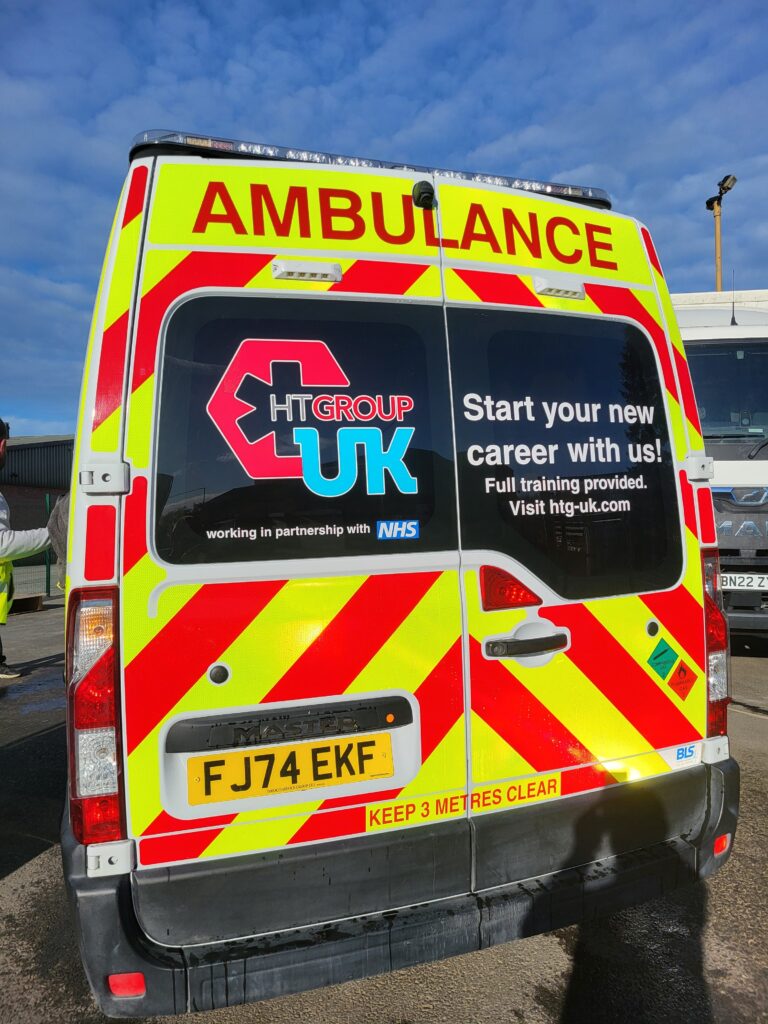
The ambulance was returned to its operator in full operational condition, structurally sound, with all blue light and emergency warning systems fully rewired and tested, rear doors correctly aligned and glazed, and livery reinstated to fleet standard. Every aspect of the original specification was met, with no compromise to the safety-critical systems or the quality of the bespoke internal environment.
SUMMARY
This case study reflects the kind of complex, multi-element repair work we regularly handle for fleet operators and their management partners. When a single incident affects bodywork, glazing, electrical systems, specialist equipment, and livery simultaneously, the ability to coordinate every strand of the repair under one roof and return a vehicle that meets full operational spec is what keeps fleet downtime to a minimum.
DOWNLOAD OUR PDF CASE STUDY NOW